

Hey there! As a supplier of Jump Starter Tire Inflators, I often get asked about the response time when starting to inflate a tire. It's a crucial aspect that many drivers care about, especially when they're in a hurry or dealing with an emergency flat tire situation. So, let's dive right into it and explore what affects the response time of these nifty devices.
First off, what exactly is a Jump Starter Tire Inflator? Well, it's a multi - purpose tool that can not only jump - start your car battery but also inflate your tires. It's like having a mini - pit crew in your trunk. You can find more about its uses on this page: Car Jump Starter Tire Inflator.
Now, let's talk about the response time. The response time of a Jump Starter Tire Inflator refers to how quickly it begins to pump air into the tire after you turn it on and connect it. Several factors can influence this time.
Battery Power
The battery of the Jump Starter Tire Inflator plays a huge role. If the battery is fully charged, the inflator can start working almost immediately. A high - capacity battery can provide the necessary power to the motor of the inflator right away. For example, if you've got a newer model with a large lithium - ion battery, it'll likely have a shorter response time compared to an older model with a weaker battery. When the battery is low, it might take a bit longer for the inflator to get up to speed. You might notice a slight delay as the battery struggles to supply enough power to start the motor.
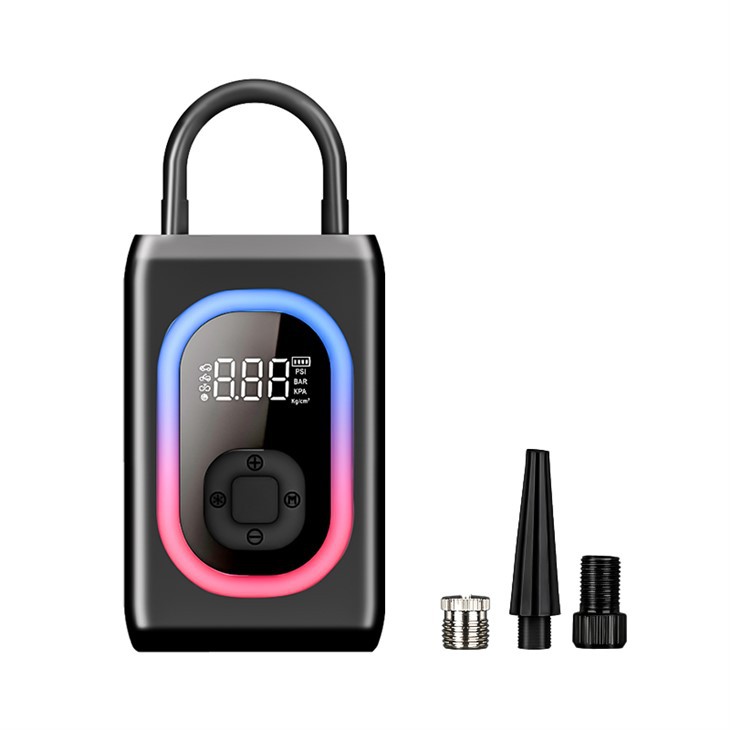
Motor Efficiency
The motor is the heart of the inflator. A more efficient motor will start running faster and start pumping air into the tire quicker. High - quality motors are designed to have a low start - up resistance. This means they can start rotating almost as soon as the power is supplied. Cheaper inflators might have motors that are less efficient, and you'll experience a noticeable delay before the air starts flowing. Some advanced motors are also designed to ramp up to their optimal speed in a very short time, which directly reduces the response time.
Hose and Connection
The hose and how it's connected to the tire valve also matter. If the hose is kinked or blocked, it can slow down the process. A proper connection to the tire valve is essential. If the connection is loose, air might leak out, and the inflator will have to work harder to build up pressure, which can increase the response time. Make sure the hose is straight and the connection to the valve is tight. Some inflators come with quick - connect valves that make the process faster and more reliable.
Tire Condition
The current condition of the tire itself affects the response time. If the tire is severely flat, the inflator will take a bit longer to start making a noticeable difference. This is because there's a large volume of air that needs to be filled. On the other hand, if the tire is just slightly under - inflated, the inflator can start increasing the pressure more quickly. Also, the type of tire matters. Tires with a larger volume, like those on SUVs or trucks, will take longer to inflate compared to smaller car tires.
Environmental Factors
Temperature can have an impact too. In cold weather, the air inside the tire contracts, and the motor of the inflator might also be less efficient. The lubricants in the motor can thicken, making it harder for the motor to start. So, in cold conditions, you might experience a longer response time. In hot weather, the air inside the tire expands, and the inflator might reach the desired pressure a bit faster, but it still needs to start pumping air first, and the motor usually operates more efficiently in warmer temperatures.
On average, a good quality Jump Starter Tire Inflator should have a response time of around 5 - 10 seconds. That's from the moment you turn it on and connect it to the tire valve until you start feeling or hearing air going into the tire. However, this can vary widely depending on the factors we've discussed.
Let me give you a real - life example. I had a customer who was in a rush to get to work and found a flat tire. He used our Jump Starter Tire Inflator. Since the battery was fully charged, the motor started running within 3 seconds. The hose was properly connected, and the tire was only slightly under - inflated. In just a few minutes, he was able to get the tire to the right pressure and was on his way.
Now, if you're in the market for a reliable Jump Starter Tire Inflator, we've got a great range of products. Our inflators are designed with high - quality batteries, efficient motors, and user - friendly features. We understand the importance of a quick response time, especially in emergency situations.
If you're interested in our products, we'd love to have a chat with you. Whether you're a retailer looking to stock our inflators or an individual who wants to have a reliable tool in their car, we can offer you the best solutions. Just reach out to us, and we can start discussing your needs and how our Jump Starter Tire Inflators can meet them.
In conclusion, the response time of a Jump Starter Tire Inflator is influenced by multiple factors, including battery power, motor efficiency, hose and connection, tire condition, and environmental factors. By choosing a high - quality inflator and taking proper care of it, you can ensure a quick and efficient tire - inflation process.
References
- General automotive knowledge on tire inflation and battery - powered tools
- Customer feedback and real - life experiences with Jump Starter Tire Inflators