

Hey there! As a supplier of Jump Starter Air Pumps, I often get asked about the noise level of these handy devices. It's a valid concern, especially if you're using one in a quiet environment or if you're sensitive to loud sounds. In this blog post, I'll dive into what the noise level of a Jump Starter Air Pump typically is, what factors can affect it, and how it might impact your experience.
What's the Typical Noise Level?
Jump Starter Air Pumps come in a variety of models, and their noise levels can vary quite a bit. On average, most portable Jump Starter Air Pumps operate at a noise level between 60 to 80 decibels (dB). To put that into perspective, normal conversation usually hovers around 60 dB, while a vacuum cleaner can reach up to 70 - 80 dB. So, in general, using a Jump Starter Air Pump is about as loud as having a somewhat lively chat or running a household appliance.
Some high - end models are designed to be quieter, with noise levels closer to 50 - 60 dB. These are great if you're worried about disturbing others, like if you're inflating your bike tires early in the morning in an apartment complex. On the other hand, more powerful pumps that can inflate large tires quickly might be on the louder side, sometimes exceeding 80 dB.
Factors Affecting the Noise Level
Motor Power and Design
The motor is the heart of a Jump Starter Air Pump, and its power and design play a huge role in how noisy the pump is. A more powerful motor can generate more air pressure and inflate tires faster, but it also tends to be louder. Motors with advanced engineering and better insulation can reduce noise significantly. For example, some pumps use brushless motors, which are generally quieter and more efficient than traditional brushed motors.
Airflow and Ventilation
How the air moves through the pump also affects the noise level. If the airflow is restricted or turbulent, it can create more noise. Pumps with well - designed air channels and ventilation systems can minimize this. Some models have large intake and exhaust ports that allow for smooth airflow, reducing the whistling and rattling sounds that can occur when air is forced through narrow spaces.
Build Quality
The overall build quality of the Jump Starter Air Pump matters too. Pumps made with high - quality materials and tight construction are less likely to vibrate and make noise. Cheaper pumps might have loose parts or thin plastic casings that can rattle and amplify the sound of the motor.
Impact on Your Experience
Indoor Use
If you're using the Jump Starter Air Pump indoors, the noise level can be a major factor. A loud pump can be annoying, especially if you're in a small space like a garage or a basement. It can also be a problem if you have family members or neighbors nearby who might be disturbed. That's why quieter models are a great choice for indoor use. You can inflate your bike tires or sports equipment without causing a ruckus.
Outdoor Use
Outdoor noise is generally less of an issue, as there are usually other ambient sounds to mask the noise of the pump. However, if you're in a quiet natural setting, like a camping site, a loud pump can still be a nuisance. Also, if you're using the pump for an extended period, even a moderate - level noise can become tiring.
Finding the Right Balance
When choosing a Jump Starter Air Pump, you need to find the right balance between noise level, power, and price. If you're on a budget, you might have to sacrifice a bit of quietness for a more affordable option. But if noise is a top priority, you might want to invest in a higher - end model.
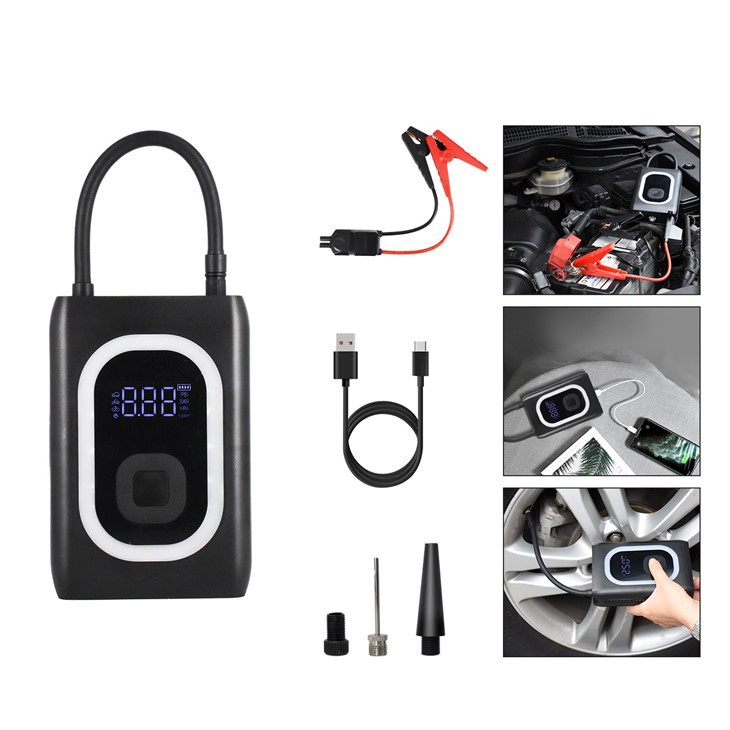
One great option to consider is the Best Portable Battery Operated Tire Inflator. It offers a good balance of power and noise reduction. With its advanced motor design and efficient airflow system, it can inflate your tires quickly while keeping the noise to a minimum.
How to Reduce the Noise
Even if you have a relatively loud Jump Starter Air Pump, there are some things you can do to reduce the noise. You can place the pump on a soft surface, like a towel or a rubber mat, to absorb vibrations. You can also try to use the pump in an area with some sound - absorbing materials, like a room with curtains or carpet.
Conclusion
In conclusion, the noise level of a Jump Starter Air Pump can vary depending on several factors, including the motor power, airflow, and build quality. While most pumps operate at a noise level similar to common household appliances, there are quieter and louder options available. When choosing a pump, think about where and how you'll be using it, and find the right balance between noise, power, and cost.
If you're in the market for a Jump Starter Air Pump, I'd love to talk to you about our range of products. We offer a variety of models to suit different needs and budgets. Whether you need a quiet pump for indoor use or a powerful one for heavy - duty jobs, we've got you covered. Reach out to us to start a conversation about your requirements and let's find the perfect Jump Starter Air Pump for you.
References
- General knowledge of Jump Starter Air Pump technology and acoustics.
- Product specifications and user reviews of various Jump Starter Air Pumps.